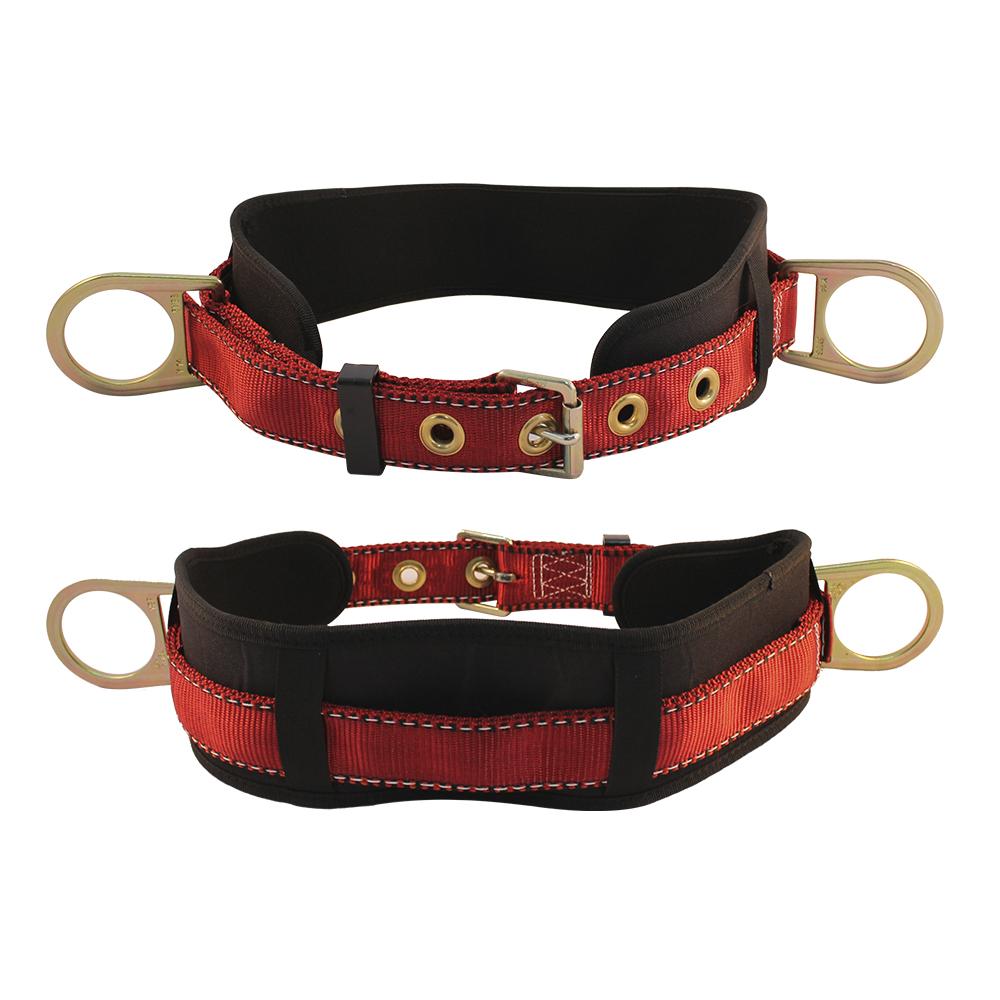
The C-ANI-2 positioning belt solves a specific need in work on poles, towers or structures: holding position in order to use both hands. Its two side D-rings receive the positioning lanyard, while the 4-inch padded back support with textile lining distributes pressure across the lower back. The 1 3/4 in high tenacity polyester webbing incorporates absorbent edges, a detail that reduces chafing on long shifts, and the forged tongue buckle allows a firm adjustment that can be verified at a glance.
One distinction should be very clear before assigning it. This belt is positioning equipment, not fall arrest equipment: it is used together with a full body harness, never in its place. The harness receives the lanyard and arrests the fall; the belt only holds the worker in position while operating. Therefore, include it within a complete system, with compatible anchorage and connection, inspection before each shift and user training, as required by NOM-017-STPS-2024 for the selection and management of PPE. Remove it from service if it has been subjected to fall arrest. Supplied in a master case of 20 pieces.
Recomendado para trabajos generales de construcción, labores sobre andamios, limpieza y reparación de edificios, torres de telefonía, actividades del sector eléctrico y forestación. Resulta especialmente pertinente en tareas donde el trabajador debe sostenerse contra un poste o estructura y necesita ambas manos libres. Encaja en telecomunicaciones, distribución eléctrica, montaje estructural y mantenimiento industrial.