
When Should You Replace Your Respirator’s Filters and Cartridges?
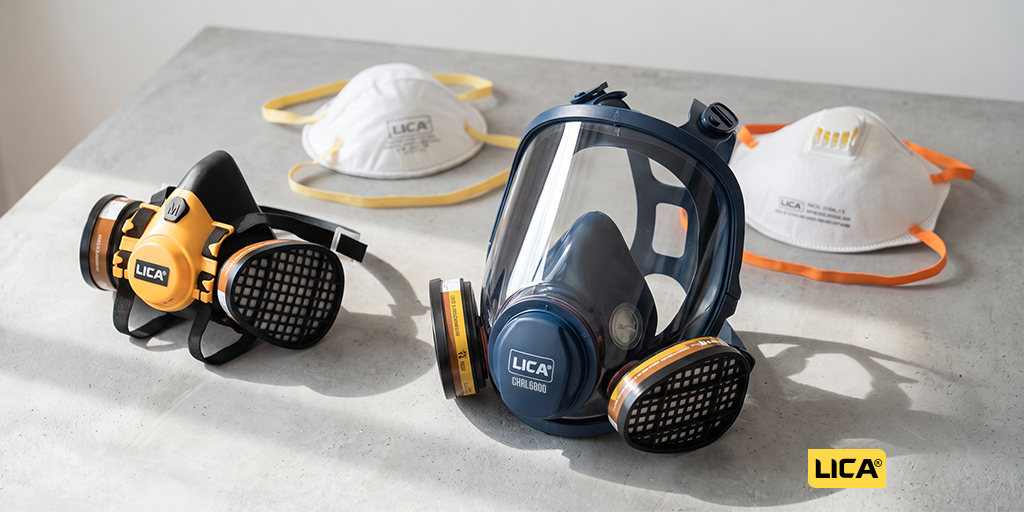
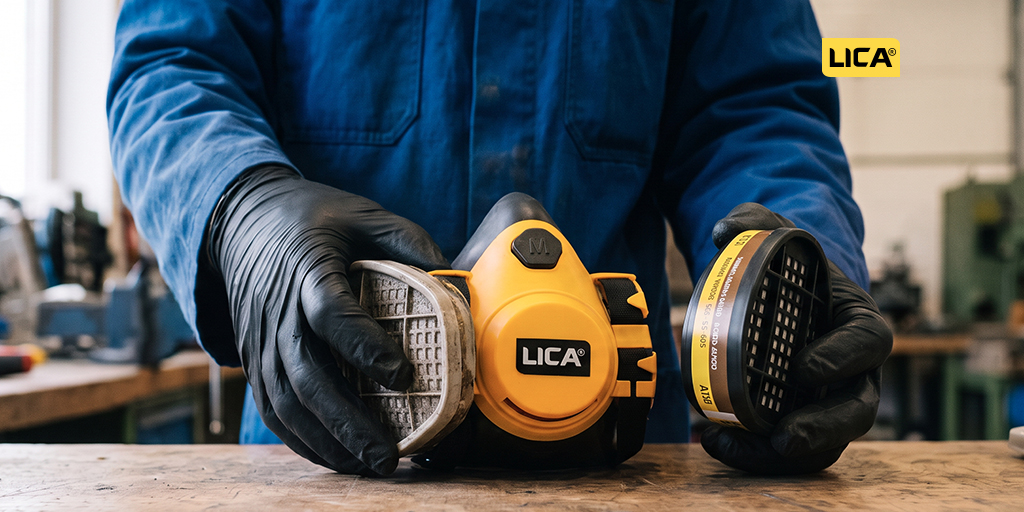
There is a widespread belief in many industrial plants: as long as the respirator can still be used, the filters and cartridges are still working. This is a mistake that can have serious consequences, because knowing when to replace respirator filters and cartridges is just as important as using the correct equipment from the start. A respirator with a saturated filter does not protect, even if the worker keeps wearing it with full confidence. The problem is that filter or cartridge saturation is not always visible. Unlike a torn glove or a boot with a worn-out sole, a cartridge that has already lost its capacity to retain contaminants can look exactly the same as a new one. And that is precisely the risk: the worker trusts equipment that, internally, has already stopped working. Do Filters and Cartridges Have the Same Service Life? No. Although they are often confused, filters and cartridges serve different functions within the respirator and also degrade differently. Particulate filters are designed to retain dust, metal fumes, mists, and airborne particles, common in construction, mining, sanding, or dust-generating work. Their service life depends mainly on the concentration of particles in the environment: in very dusty environments, a filter can become saturated within just a few hours of intensive use. Chemical cartridges — such as activated carbon cartridges for organic vapor and acid gases — protect against specific gaseous contaminants. Their adsorption capacity differs from that of a mechanical filter and depends on factors such as contaminant concentration, humidity, and ambient temperature. Signs That Indicate Saturation Difficulty breathing. In particulate filters, breathing resistance is the clearest sign of saturation. The accumulation of particles clogs the filter’s porosity, preventing normal airflow. When inhaling requires noticeably more effort than when the respirator was first put on, it is time to replace it. Perceiving the odor or taste of the contaminant. In chemical cartridges, this is the most critical sign and, at the same time, the latest one. If the worker perceives the odor or taste of the substance they are supposed to be protected against, the cartridge has already lost its adsorption capacity and the contaminant is already being inhaled. This moment should not be relied upon as a control method — by then, exposure has already occurred. Irritation, dizziness, or itching during use. These symptoms can indicate exposure due to cartridge failure before the odor becomes perceptible, especially with substances that have a high olfactory threshold. Any such symptom during respirator use should be treated as an immediate alert for replacement. Visible physical damage. Filters or cartridges that are wet, visibly dirty, deformed, or have a damaged housing must be discarded immediately, regardless of accumulated usage time. Why Waiting for Symptoms to Appear Is Not Enough One of the most common mistakes in respiratory protection is assuming that filters and cartridges last until they look damaged or until some perceptible symptom appears. In critical operations or with highly toxic contaminants, waiting for the saturation signal is waiting too long, because by the time the worker perceives the problem, exposure has already happened. That is why technical recommendations from recognized manufacturers establish time limits independent of user perception. As a general reference, it is recommended to replace filters and cartridges after a maximum of 30 to 40 hours of actual use, or every 30 calendar days after opening the package, whichever occurs first. In environments with high contaminant concentration — such as silica dust in construction or mining — this period can be drastically reduced, even to less than a day of intensive use. Factors That Accelerate Replacement Several external factors can significantly reduce the service life of filters and cartridges, regardless of elapsed time: High contaminant concentration. The higher the concentration in the environment, the faster the filtering element becomes saturated. High humidity. Humidity can degrade the adsorption capacity of activated carbon cartridges, reducing their effective protection time. Extreme temperature. Both intense heat and cold affect the performance of the filtering material and can accelerate its wear. Worker’s breathing rate. Physically demanding activities increase the volume of air passing through the filter, accelerating its saturation. Incorrect cartridge for the contaminant. Using an organic vapor cartridge in the presence of a different contaminant than the one it was designed for offers no real protection, regardless of how much use time it has left. What the Standard Requires in Practice NOM-017-STPS-2024, in force since September 2025, requires employers to have documented procedures for PPE inspection, maintenance, replacement, and final disposal, including respiratory protection. This means that replacing filters and cartridges cannot depend solely on individual worker perception — there must be a preventive program with a defined replacement schedule based on contaminant type and exposure conditions, along with documentary records of each replacement. Establishing a replacement schedule, rather than waiting for signs of saturation, not only complies with the standard — it reduces the risk of undetected exposure and prevents respiratory protection from depending on each worker’s judgment during each shift. What This Means for Companies and Distributors Extending the use of filters and cartridges to cut costs is one of the most common and riskiest mistakes in respiratory protection. The apparent savings on replacement compare poorly against the real cost of an occupational respiratory illness, which includes medical care, disability payments, increased IMSS risk premiums, and legal liability. For distributors, understanding these replacement cycles represents a concrete advisory opportunity. A client with a well-defined preventive replacement program is a client who purchases regularly and sees the supplier as a technical ally, not just a supply vendor. At LICA, we offer cartridges and compatible respirators designed for different risk profiles, including the CHF03 cartridge, classified A1E1, for organic vapor and acid gases, compatible with the CHRL200 half-face respirator. All available for companies and distributors throughout Mexico, because respiratory protection that is kept without being replaced stops protecting, even if the worker keeps trusting it. Want to establish a filter and cartridge replacement program for your company? Contact us or